

Unique upholstery options for your fine furniture project - Danish rope cord weaving
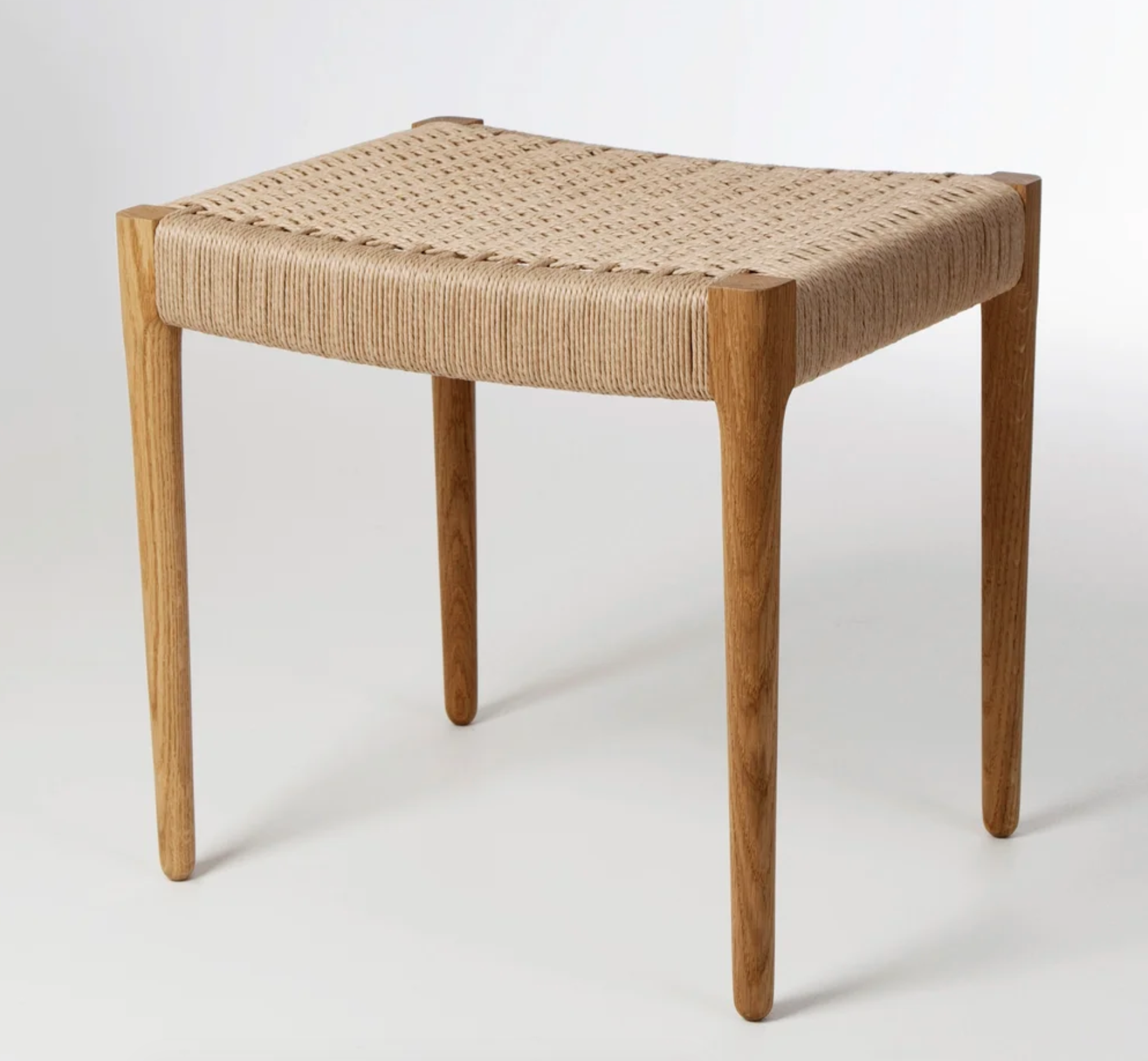
A Danish cord stool made during one of our Danish cord weekend courses (next course dates are 19-20 September 2026)
You are looking to upholster your latest chair, bench or stool project, but you are looking for upholstery that requires very little maintenance, will stand the test of time in terms of strength and style, and is resistant to wear, discolouration and stains…
Have you considered Danish cord?
History of Danish cord
Danish cord is treated paper twisted into an incredibly strong three-ply rope, usually around 3.6mm thick. It originated in Denmark and is known for its importance in the Danish Modern period of the 1940’s and 1950’s. It garnered attention after WW11 in Denmark and Europe due to its unique woven aesthetic appearance, ease of production and longevity.
Due to the difficulty of replicating by machine, it is generally only seen on high end furniture that are handcrafted by fine furniture makers. You might have seen Danish cord upholstery used in iconic furniture designs such as the Wishbone Chair and the Peacock Chair by Hans Wegner.
Prior to the popularity of Danish cord, woven seats would have typically been made out of rope, rattan or leather - or even further back… twisted straw!
With interest in sustainable materials soaring in our current ecological climate, Danish cord is enjoying a renewed surge in popularity among furniture makers as it is made entirely from unbleached natural paper twine. Danish cord is still widely made in Denmark, but its production is now international, with China producing cord at internationally competitive rates.
Why use Danish cord?
The advantages of using Danish cord for upholstery are:
Longevity: With careful use, a good seat is said to last up to 60 years before it needs to be rewoven.
Sustainability: The cord is made out of unbleached, smooth natural paper. It is also easy to find Danish cord made from FSC-certified paper, which means that the paper came from responsibly managed forests.
Strength: The natural strength of the intertwined cord, made stronger by the weave pattern, lends itself to a durable chair that can take a lot of weight and is resistant to wear.
Durability: Most Danish cord manufacturers treat the paper cord with a light wax in order to make it more resistant to dirt, discolouration and stains.
Comfort: The paper has some natural elasticity, which makes the seat increasingly comfortable over time as it settles to “fit” the person sitting on it.
Style and character: The craft of weaving seating from Danish cord means that it’s difficult to replicate on a mass level of production, as such it is generally only seen on high end furniture handcrafted by makers. The style of the weave can create different aesthetic looks on furniture.
A variety of weave styles: You can choose from many different weave patterns to give your chair a unique look.
Types of Danish cord
Danish cord comes in two different types - laced and unlaced.
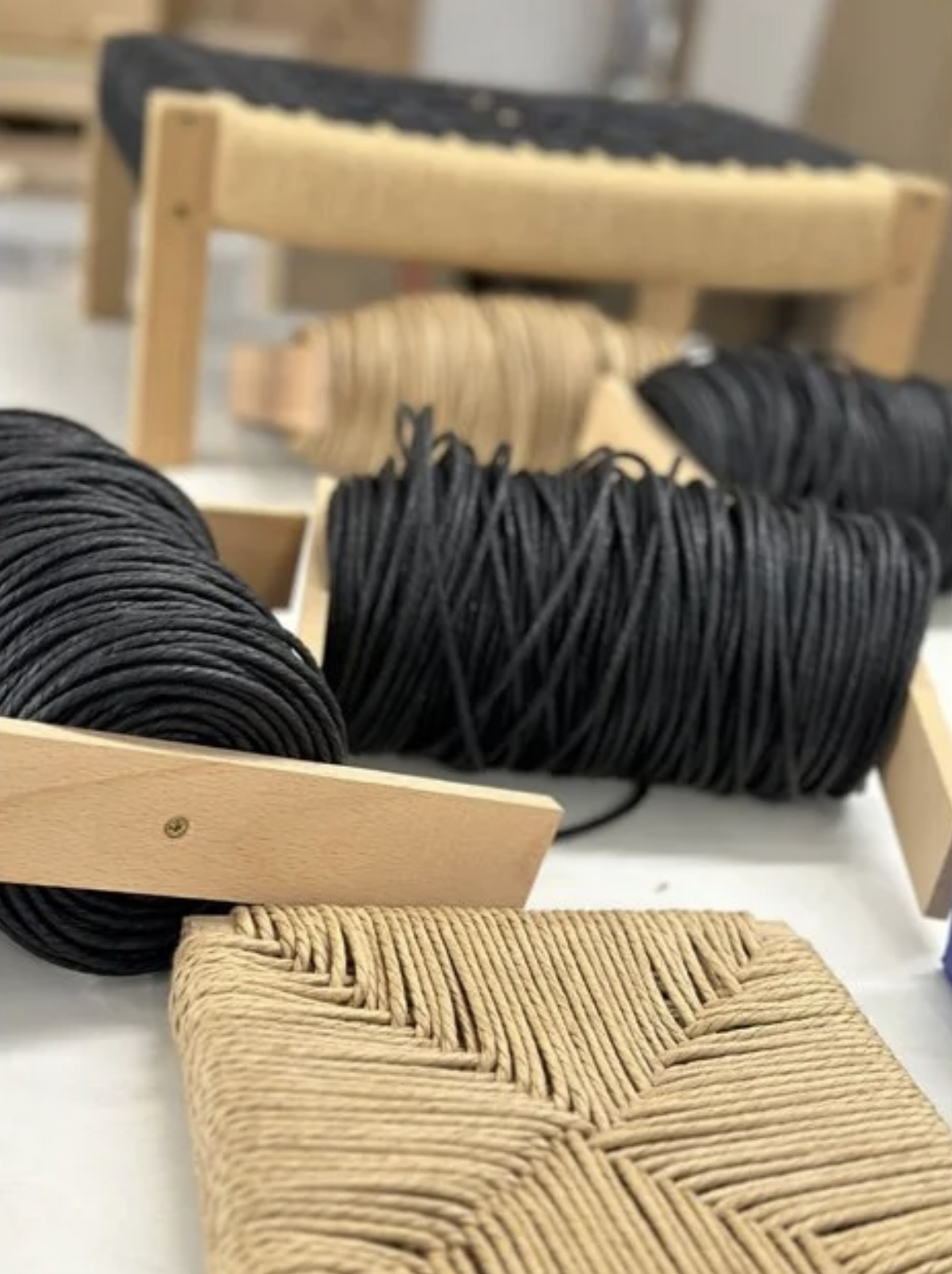
Laced rope cord is similar to typical rope where the three twisted strands can be clearly seen. It is more tightly twisted than unlaced cord, making it feel crisper and also look a little more shiny. Some find laced Danish cord more firm to sit on, so this might be one of your considerations when deciding which type of cord to use.
Unlaced cord is less tightly twisted, therefore making it feel softer. It also looks flatter and doesn’t have the prominent rope-like spiral lines seen in laced cord. It is also usually slightly thinner than laced cord by about 0.5mm.
On our Danish cord weaving short weekend course, we use laced cord, as can be seen in the photo below.
Choosing a Danish cord pattern
During the Danish cord weaving weekend course at Williams & Cleal, we generally teach the two by two pattern and another weave option - but there are many possibilities with a woven seat. You can easily find patterns online for Herringbone weaves, open weave, vintage weaves and wood splints and diamond weaves.
It is important to choose your pattern carefully, as some weaving patterns are not ultimately suited to Danish cord - such as when you have to weave through holes in a frame or on a circular seat. As the cord is quite thick, it can be difficult to pass it through holes in a frame - and when turned at an angle on a sharp edge, the cord would shear on the edge of the hole under weight stress and break. It also doesn’t suit round chairs as the paper cord can slide or move, making it difficult to keep in place when weaving around a circular rail.
Challenges
There are a few common challenges faced by furniture makers when weaving with Danish cord.
It has been said that the most challenging part of weaving a Danish cord seat is keeping the tension even across the whole seat. Maintaining a regularity of straight lines, particularly on patterns with a diagonal line running in to the centre, is also often difficult for those with less experience. Another challenge that you might encounter is when the cord “remembers” the curved shape of the coil it was kept in during the manufacturing process, causing it to try to return to that shape and becoming tangled as you weave.
In addition to the technical challenges above, Danish cord weaving can also be physically demanding. The repeated pulling on the cords to get them tight enough can cause blisters, rope burns, and fatigue.
Learn Danish cord weaving

A Danish cord stool made during one of our weekend courses
At Williams & Cleal, we offer short weekend courses on Danish cord weaving, among other fine furniture making courses.
Students learn to make a beautiful Danish cord stool in Ash, Oak or Walnut wood over the course of two days. The next course is taking place on 19 and 20 September 2026.
Spaces are limited so book your place quickly. We also offer gift vouchers on checkout should you wish to purchase any of our fine furniture short courses as a gift.